Before Impact Assessment: How Policy Pilots Became Tools for Learning
Policy pilots have shifted from demonstrations toward structured learning. See how that history helps you distinguish practical lessons from claims an early trial cannot support.

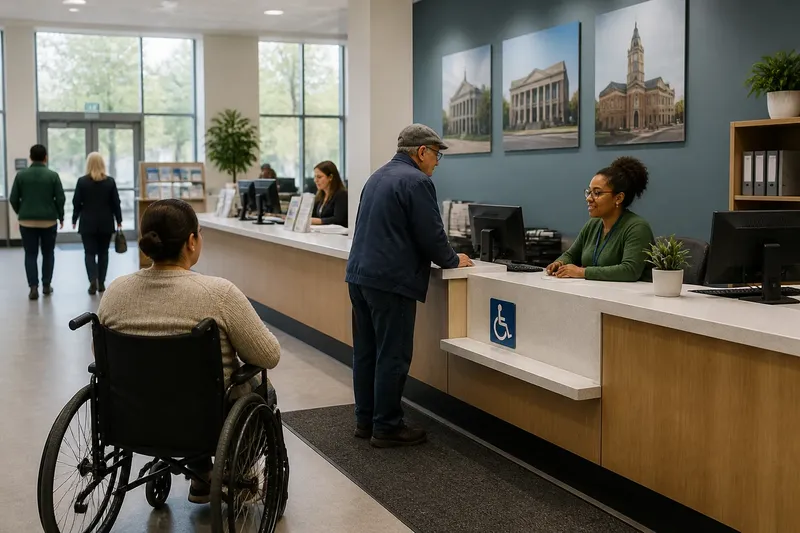
A policy pilot can begin with a modest question: can a local office deliver evening appointments without disrupting its other services? The answer may guide a decision, but the history of policy pilots is not a simple march from demonstration to impact assessment. Different purposes have long coexisted, and the useful lesson is to ask what a particular trial was designed to clarify.
Why did governments try limited versions of policies?
Public proposals often rely on assumptions about how agencies will work, how residents will respond, and what local services can support. A bounded trial offers a way to inspect some of those assumptions before a decision is made about broader action.
Limited inquiries, demonstrations, and staged introductions have all been used in public administration. Their forms and aims differ. A demonstration may make a proposed service visible or show that agencies can organize it. A pilot may also be designed to answer a specific question about delivery or outcomes. There is no single historical path that describes every policy experiment.
The boundaries matter. A pilot might cover a selected neighborhood, a particular group, or one part of a service. Like trying a key in one lock, the result can tell you something about that lock; it cannot tell you whether the key fits every door.
How did evaluation become part of the pilot idea?
Some limited trials have been used primarily to demonstrate that a proposal could operate. Evaluation adds a more explicit inquiry: what changed, for whom, and under what conditions? In practice, a pilot can serve both purposes, but evidence of workable delivery is not the same as evidence of an outcome.
Evaluation methods vary with the question. Interviews can describe participant experience. Administrative records can show patterns in service use. Comparisons between groups or places may help assess whether outcomes differ, though the strength of any causal conclusion depends on how the comparison was designed and what else changed.
This distinction prevents a common historical shortcut: treating every pilot as an early impact assessment. A trial’s label does not reveal its purpose. The plans, records, and decision process do.
What does a policy pilot’s history help you ask?
Was the trial meant to demonstrate delivery?
Look for questions about staffing, agency coordination, service access, and whether the planned activities could be carried out. Those details indicate a practical learning purpose, even if the trial also collected outcome information.
Was it designed to assess outcomes?
Check whether the plan defined an outcome and described how it would be assessed. If it used a comparison, ask what the comparison can establish and what differences between settings or participants may still affect the result.
Does the word “pilot” tell you what happened?
No. “Pilot” usually signals a bounded effort, but it does not by itself tell you who took part, what evidence was collected, or which decision the trial was meant to inform. Read the stated purpose and scope rather than assuming the label has a fixed meaning.
Why does the next decision matter?
A pilot has public value when its evidence is connected to a real choice, such as revising the service, gathering more information, expanding it, or stopping it. If the decision was already settled, the trial may have served a different purpose than open-ended learning.
How can you read the historical record without overclaiming?
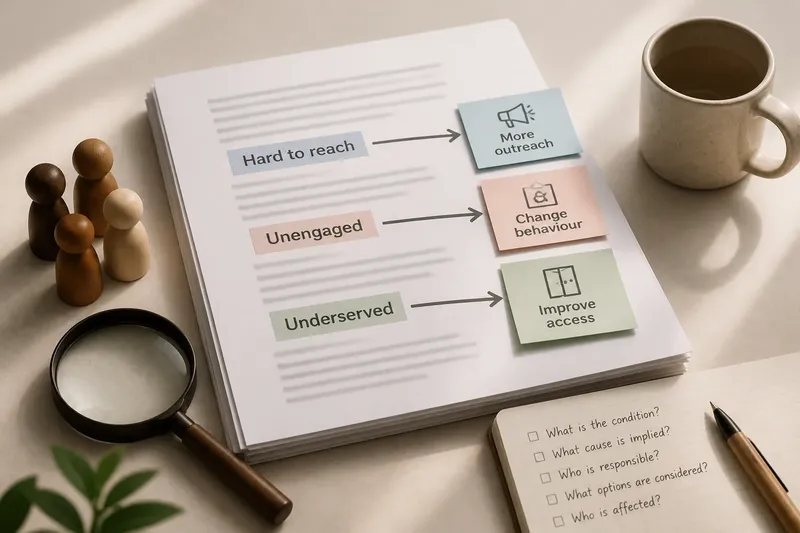
Start with the original problem and learning question. A program described as a “mobility initiative” might aim to reduce missed appointments, improve access, or test a new transport arrangement. Those aims call for different evidence, so the program name alone is not enough.
- Stated problem: If the documents identify a specific public difficulty, then use it to judge whether the trial’s questions fit that difficulty; if they do not, look for the gap before accepting claims about relevance.
- Trial purpose: If the plan focuses on whether staff can deliver a service, then treat it as evidence about operations; if it also claims to assess outcomes, check for a separate outcome question and method.
- Scope: If the record names the people, places, agencies, and conditions included, then limit conclusions to that scope unless a clear reason supports extending them; if those boundaries are missing, treat broad claims cautiously.
- Evidence collected: If records, interviews, or observations match the stated question, then consider what each can answer; if a key question has no corresponding evidence, do not infer an answer from activity alone.
- People not reached: If participation records show that some eligible residents did not take part, then ask what is known about their access; if the record is silent, avoid treating participants’ experiences as representative of everyone affected.
- Decision after the trial: If officials set out options that evidence could inform, then compare the result with those options; if no decision rule is stated, do not treat a favorable description as an automatic case for expansion.
Imagine a town record describing a trial of evening appointments at a public service office. The starting plan says the office will offer the appointments, record use, and ask users about access. The record later shows that staff delivered the service and some residents used it, while interviews describe convenience for those who attended. A reader can conclude that the arrangement operated and that participating users reported an access benefit; without information about residents who could not attend or a suitable comparison of outcomes, the reader cannot conclude that evening hours improved access for the whole town. The next choice might be to revise outreach or collect information about non-users before considering expansion.
When is a pilot not enough to answer the policy question?
A small-scale trial may not reveal what happens when a policy depends on broad coverage or coordinated action across many agencies. In that case, the limited setting may help identify practical issues but leave the central question about wider effects unanswered.
A pilot may also be a poor fit if the most important uncertainty concerns outcomes rather than delivery. Officials should choose an evaluation design suited to that question, while considering whether comparison arrangements are fair and appropriate. For decisions with substantial effects on people’s rights or access to services, qualified policy and evaluation professionals can help assess the design.
History offers no universal formula for interpreting a policy pilot. It does offer a useful discipline: identify the trial’s purpose, its limits, and the choice it was meant to inform. When you encounter a policy pilot, that discipline helps separate a lesson about one setting from a claim about what should happen next.